
Cold weather doesn’t make you weaker. It makes you tighter, slower to warm up, and more likely to compensate — which is why winter is prime time for calf strains, shin splints, pulled lats, and that nagging piriformis that comes back every January. A targeted sports massage every two to three weeks changes the math.
Why winter training breaks people
Three things change when the thermometer drops below 55°F:
- Soft tissue viscosity rises. Muscles and fascia resist stretch more at lower temperatures. Your usual 10-minute dynamic warm-up is now a 15–20 minute warm-up, and most people skip the extra time.
- Blood flow prioritizes your core. Peripheral vasoconstriction pulls blood away from the hands, feet, and surface muscles, which means your calves and forearms are cold even when your trunk is warm. That cold tissue is the tissue that tears.
- Your gait and posture change. You hunch, shorten your stride, and clench your jaw. Multiply by 25 miles of weekly running or three gravel rides, and you have a recipe for upper-trap trigger points and lower-leg overuse.
What snaps first, by sport:
| Sport | What usually goes | Why |
|---|---|---|
| Running | Calf, soleus, shin splints, Achilles | Cold lower leg + stride shortening = overload at the ankle complex. |
| Cycling | IT band, lower back, neck | Longer time in a fixed, flexed position in cold air. |
| Lifting | Pec minor, lats, hamstring origin | Insufficient warm-up before heavy work when the gym is 65°F. |
| Pickleball & tennis | Hamstring, calf, lateral elbow | Explosive starts into cold tissue, especially the first game of the day. |
| Hiking & trail running | Peroneals, posterior tibialis, hip flexor | Uneven terrain + cold stabilizers = more work for the small muscles. |
Pre-event vs. post-event vs. maintenance — three different sessions
If you ask for “a sports massage” without saying when and why, you’ll get something generic. The three main flavors are built differently and belong at different points in your week.
Pre-event (24–72 hours before a race, ride, or tournament)
Short, light, and oriented toward mobility and warm circulation — not deep work. Think 30 to 60 minutes. Techniques are brisk strokes, light compression, and gentle range-of-motion work. The goal is to leave the table feeling springy, not sore. Skip the day before a race; aim for 48–72 hours out.
Post-event (24–72 hours after a hard effort)
Longer, deeper, slower. 60 or 90 minutes. Techniques include longer-held myofascial work, cross-fiber friction on the hamstrings and calves, and lymphatic flushing to clear metabolic waste. You will feel this one. Many clients book a 10-minute infrared sauna before the session to speed warm-up — especially useful in December.
Maintenance (every 2–3 weeks through the training season)
Your bread-and-butter session. 60 to 90 minutes of focused deep tissue on the areas that overload for your sport, plus whatever is complaining that week. Our Relax Myora membership was designed around this pattern — one 60-minute session per month at member rate, plus a discount on everything else, so a weekly or biweekly athlete isn’t paying full price every time.
A sample two-week block for a runner training through January
Week 1
Monday — Easy 4 miles. 10-min foam roll calves/soleus after.
Wednesday — Tempo run. Post-run contrast shower.
Saturday — Long run (10–14 miles).
Sunday — 60-min recovery massage (post-event). Focus on calves, posterior tib, glute med.
Week 2
Monday — Rest or 20-min walk.
Thursday — Interval session.
Saturday — Race or long run.
Friday pre-race — skip massage. Save it for 72 hours after.
Over a 12-week block, this works out to five or six sessions. Members pay roughly half what drop-ins pay for the same cadence.
What the session actually feels like
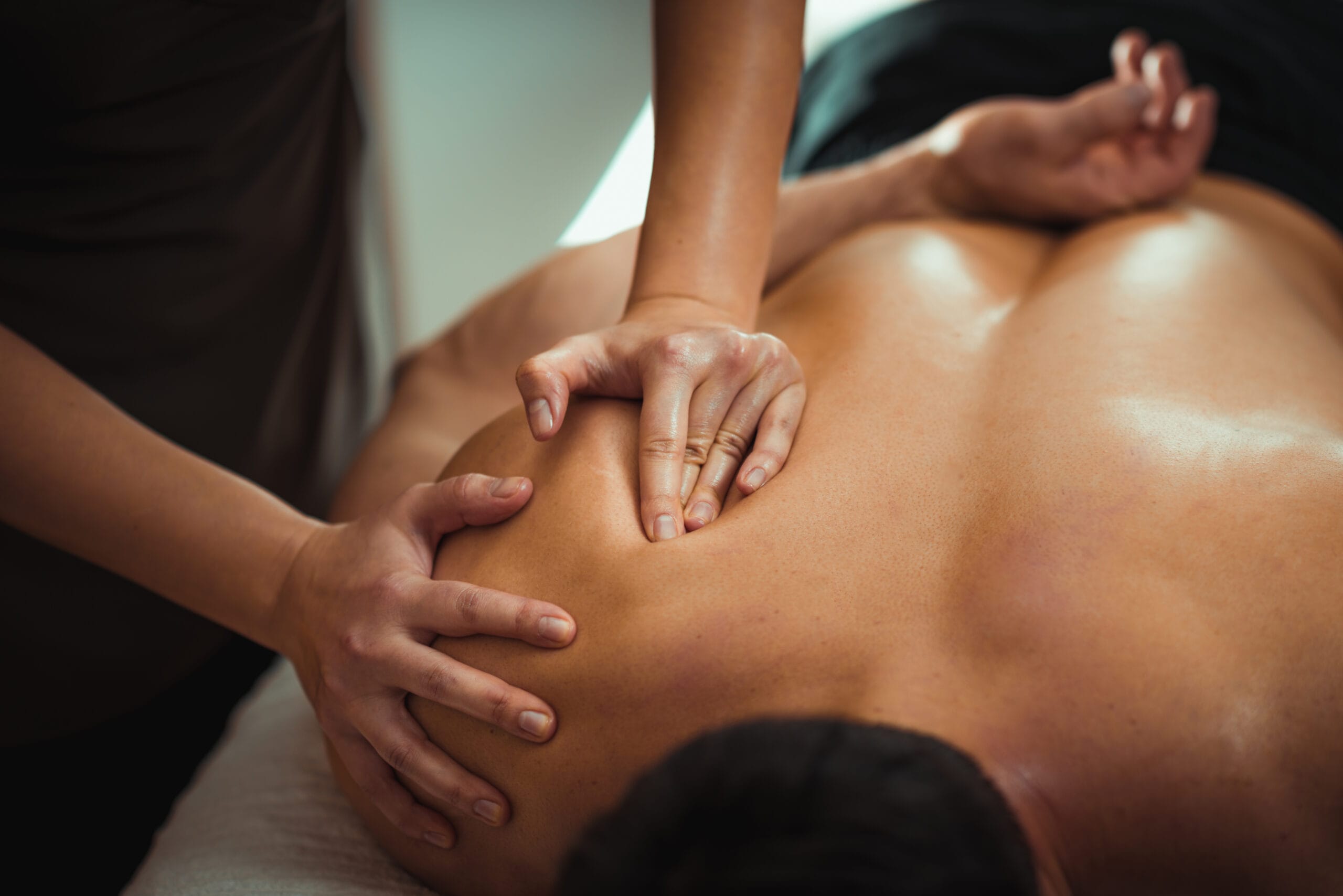
A sports-focused session at Relax Myora is firmer than a Hallmark relaxation massage. The pressure is deliberate, held longer at tight insertion points (the attachment of soleus to the Achilles, the top of the glute med, the lateral quad), and your therapist will ask you to move — flex a knee, point a foot, press into a hand — while they work. This is pin-and-stretch, and it’s the single most effective technique for restoring sliding between muscle layers that cold weather has glued together.
You should feel:
- Dull aching pressure on known trigger points, rating 4–7/10
- A noticeable release — often with warmth and sometimes an involuntary exhale — when a tight band lets go
- Lighter, bouncier legs or shoulders when you stand up
You should not feel sharp pain, numbness down the limb, or pain that persists after the pressure comes off. Tell your therapist in those cases — the technique or depth will change immediately.
Recovery add-ons worth it in winter
Three enhancements pair unusually well with cold-weather sports work:
- Infrared sauna (20 min before) — pre-warms peripheral tissue, cuts your effective warm-up time in half, and makes deeper work tolerable sooner.
- Cupping (included or added) — pulls fascia apart and improves local circulation in areas that chronically grip, especially calves and the mid-trapezius.
- Scalp or hand/foot focus — the overlooked parts that absorb the stress of winter driving and cold mornings. Twenty minutes of each at the end of a sports session resets your parasympathetic tone before you head back out.
Red flags — book a doctor’s appointment, not a massage
Don’t book a session if:
- Your calf is one-sided swollen, red, and hot — rule out a DVT first.
- You felt a pop and the muscle immediately bruised and lost power — likely a grade II/III strain.
- You have fever, chills, or active infection.
- You have an undiagnosed sharp pain that gets worse with rest.
In every case, see your physician first. We’ll be here when you’re cleared to resume.
Where to book — Frisco or Allen
Frisco
5285 Independence Pkwy, Suite 100
Frisco, TX 75035
214-407-7314
Easier parking, slightly larger treatment rooms — good if side-lying positioning matters.
Allen
190 E Stacy Rd, #1518
Allen, TX 75002
469-891-9938
Closer for Allen, Fairview, McKinney and Lucas residents. Infrared sauna on-site for pre-session warming.
Frequently asked questions
Pre-event (24–72 hours before) is shorter, lighter, and oriented toward mobility and circulation — not deep tissue work. Post-event or recovery massage comes 24–72 hours after a hard effort and uses deeper, longer-held techniques.
Not the day before. Aim for 48–72 hours before a race, half marathon, or ride for pre-event work, and 24–72 hours after for recovery.
Yes, when it’s targeted. We work the posterior tibialis, soleus, and fascial compartments around the shin, plus the glute med and intrinsic foot muscles. Pair with a shoe-wear check and a two-week running volume reduction.
If the shoulder has not been imaged and the pain started suddenly, from a fall, or with numbness down the arm, see your physician first to rule out a rotator-cuff tear, labral injury, or cervical issue. Massage complements but does not replace that work-up.
Lifters benefit more from recovery-style sessions once every 2–3 weeks, focused on lats, pec minor, quads, and the deep hip rotators. We often add infrared sauna before the session in winter.
A deep post-event session may leave you lightly sore for 24 hours. Pre-event work should leave you feeling looser, not sore.
If you’ll book at least 10 sessions in the year, yes. The math works out even if two of them are in a single week.
Book your winter sports session
60-minute Sports Massage starts at $70. 90-minute recovery sessions available at both locations.