
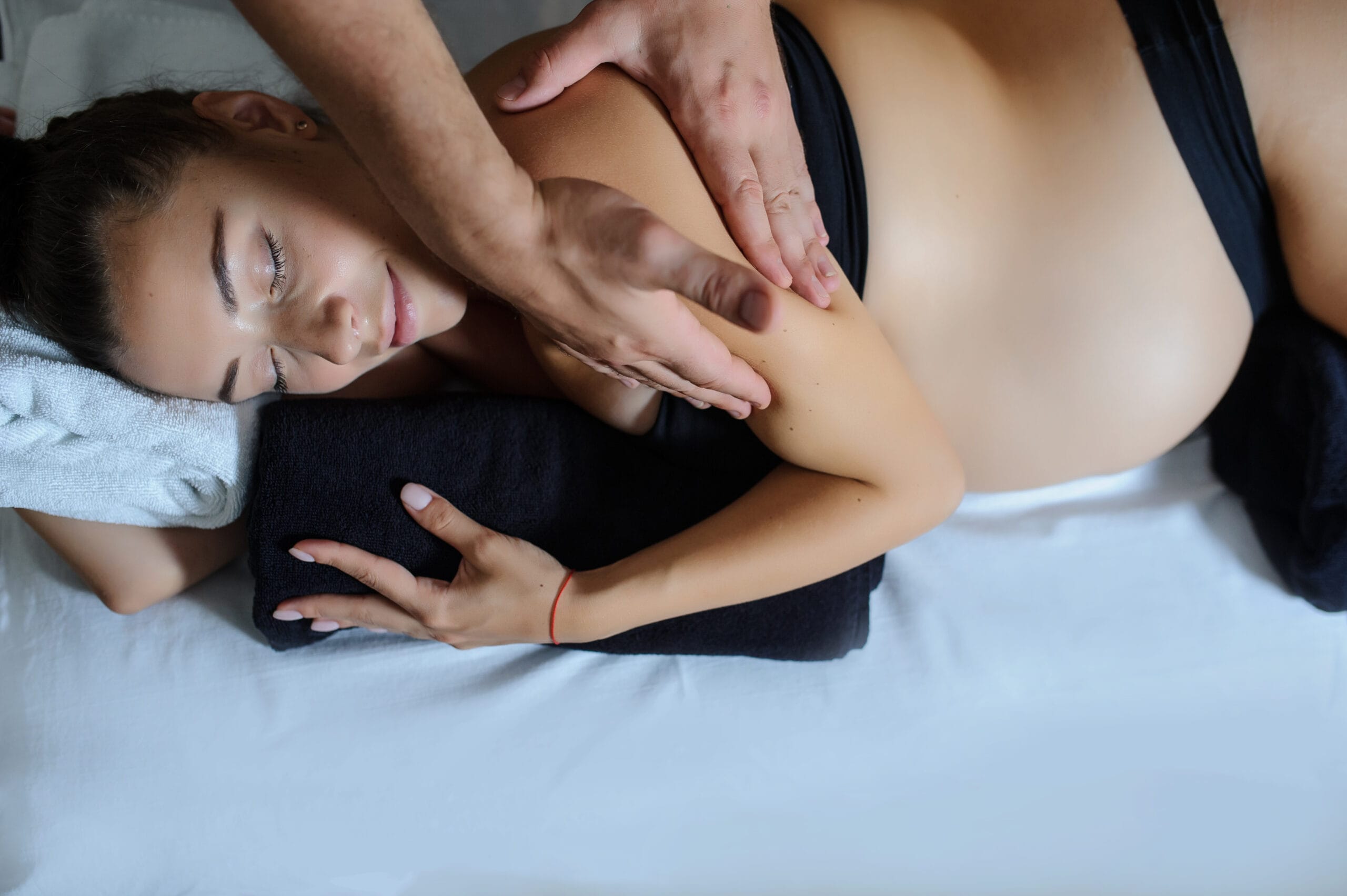
Pregnancy asks a lot of your body. Here’s how a properly-trained prenatal therapist in Allen can help — safely, at every trimester — with the back pain, hip tightness, swelling, and stress most guests come to us for.
Pregnancy asks a lot of your body. Ligaments loosen, your center of gravity shifts, hips widen, and by the second and third trimester your low back, hips, and calves are working overtime just to keep you upright. Prenatal massage — done by therapists trained in it — is one of the safest, most effective ways to give that overworked body some real relief.
At Relax Myora in Allen, prenatal is one of the sessions we’re most careful about, because “a regular massage while pregnant” isn’t the same thing as prenatal massage. Here’s the difference, what to expect at your Allen session, and how to tell if now’s the right time.
What makes prenatal massage different
Three things separate a true prenatal session from a general massage:
- Positioning. After the first trimester, lying flat on your back for extended periods can compress the vena cava. We use side-lying positions with pillows and bolsters that support your bump, hips, and knees — comfortable enough that most guests fall asleep.
- Pressure and technique. Prenatal work is medium to firm on the areas that need it (upper back, glutes, hips), lighter where it needs to be (legs, abdomen), and avoids specific pressure points that aren’t appropriate during pregnancy.
- Training. Our prenatal therapists are certified in prenatal-specific work — they know what to avoid, what to look for, and when to refer back to your provider.
Before you book: if you have a high-risk pregnancy, gestational diabetes, preeclampsia, placenta previa, or you’ve been placed on bed rest, please get written clearance from your OB or midwife first. We’ll ask at check-in.
When to start — and why
Most guidelines suggest waiting until after the first trimester (past week 13) for elective massage, though many providers are comfortable with it earlier for low-risk pregnancies. From there:
- Second trimester (weeks 14–27): the sweet spot. Energy is back, morning sickness has eased for most, and prenatal massage helps with the aches that start showing up as your bump grows.
- Third trimester (weeks 28+): arguably when you’ll want it most. We focus on hip openers, low back, glutes, and swollen legs and feet. Many Allen guests come in every 1–2 weeks in this stretch.
- Postpartum: once you’re cleared by your provider (typically 4–6 weeks postpartum, longer for cesarean recovery), we can transition to a postpartum-focused session. See more below.
What relief actually looks like
Guests come to our Allen spa for a specific list of complaints. Prenatal massage helps most with:
- Low back and SI joint pain from the postural shift of a growing bump
- Hip and glute tightness that shows up around week 20 and doesn’t leave
- Sciatic-like nerve pain down one leg (we work around, not through, active nerve pain)
- Swelling in feet and lower legs — light lymphatic-style strokes help move fluid
- Neck, shoulder, and upper-back tension from changing breast size and postural compensation
- Better sleep the night of the session — consistently the #1 review point
- Stress and anxiety as your due date approaches
Your Allen prenatal session, step by step
- Arrive 10–15 minutes early. Our intake asks how far along you are, any complications, prenatal vitamins and medications, and where you’re feeling it most today.
- Meet your therapist. They’ll walk you through positioning options and any adjustments for your stage of pregnancy.
- Get comfortable side-lying. We use a full pillow setup — between the knees, under the bump, along the back — so you can relax without holding yourself in position.
- The session. Sixty minutes is standard; ninety gives us time for both the upper body and the hips/legs work most third-trimester guests want.
- Debrief. Your therapist will point out where they found tension and suggest simple positioning tricks (a pillow between the knees at night, hip circles in the morning) that extend the benefit.
Safety first — what we watch for
A few things our prenatal therapists always keep in mind:
- No deep abdominal work at any stage.
- Light pressure over the legs and no deep work on the inner thighs — pregnancy increases risk of blood clots.
- Certain acupressure points that are traditionally avoided in pregnancy stay off the menu.
- Room temperature stays cooler than a standard session; overheating isn’t ideal in pregnancy. Same reason we don’t recommend the infrared sauna add-on while pregnant.
- Positioning breaks — if you need to shift, use the restroom, or just sit up for a minute, say so. It’s expected.
Postpartum: keep the appointment
Once your provider clears you, a postpartum session focuses on very different work: opening the chest and shoulders (from feeding posture), releasing the upper back and neck (from holding a baby who never stops growing), gentle glute and hip work as your pelvic floor recovers, and lymphatic-style strokes if you’re still holding fluid. Many Allen guests move from prenatal to a monthly postpartum session as part of their membership.
A great gift. Prenatal and postpartum sessions are one of the most-requested items on our gift cards page — a genuinely useful present for a baby shower, a friend heading into their third trimester, or a new mom in the fourth trimester.
What to bring — and what to leave at home
- Loose, easy-to-change clothes for after.
- A water bottle. We’ll refill it.
- Your provider’s name and any clearance notes if you’re high-risk.
- Leave heavy meals for at least 60–90 minutes before your session.
Frequently asked questions
When can I start prenatal massage during pregnancy?
Most providers are comfortable clearing prenatal massage after the first trimester (week 13+) for a low-risk pregnancy. If you’re high-risk or have complications, get written clearance from your OB or midwife before booking.
Is prenatal massage safe in the third trimester?
Yes, and it’s often when it helps most. We use side-lying positioning with full pillow support, keep pressure moderate on the areas that need it and light where it needs to be, and avoid abdominal work entirely.
How is prenatal different from a regular massage?
Different positioning (side-lying, not face-down or face-up), different pressure map (light on legs, moderate on back and hips), and specific techniques and pressure points to avoid. Our prenatal therapists are certified in this specifically.
How often should I get a prenatal massage?
Every 2–4 weeks in the second trimester, and every 1–2 weeks in the third for most guests. Our membership covers a monthly session and often pays for itself if you’re coming in regularly.
Can I use the infrared sauna while pregnant?
We don’t recommend it. Elevated core temperature isn’t ideal in pregnancy. We’ll happily welcome you back to the sauna postpartum, once you’re cleared.
How much is prenatal massage at your Allen location?
Prenatal sessions start at $120 for 60 minutes at our Allen spa. Ninety-minute sessions and postpartum sessions are available — ask at booking or see the Prenatal service page.